Skip to content
Octopus Consultancy Limited

Workplace Safety Surveys

Air Quality Monitoring Survey

Measure what your generators, boilers and processes are really emitting, and show NEMA and your workers that the air is within safe limits.

  • NEMA Firm of Experts
  • Operating since 2014
  • Offices in Nairobi and Ruiru

Who needs it

  • Facilities with boilers, generators, furnaces or incinerators
  • Manufacturers, quarries, cement and asphalt plants
  • Construction projects near homes, schools or hospitals
  • Facilities whose EIA licence requires emissions monitoring
  • Workplaces with dust, fumes or solvent vapours

What you receive

  • Stack emission measurements for boilers and generators
  • Ambient air and dust monitoring at the site boundary
  • Workplace exposure assessment
  • Report comparing results with legal limits
  • Recommendations to reduce emissions and exposure

Legal basis

  • Environmental Management and Co-ordination (Air Quality) Regulations, 2014
  • Occupational Safety and Health Act, 2007
  • EIA licence conditions and environmental audit requirements

Air pollution affects the health of workers and neighbours, and Kenyan law sets limits on what facilities may emit and what workers may be exposed to. An air quality monitoring survey gives you hard data: what is being emitted, how it compares with the limits, and what to do if it doesn’t comply.

Octopus Consultancy monitors flue gases (SOx, NOx, CO, VOCs, H2S and others) emitted from boiler and generator stacks, as well as dust in workplaces and the surrounding environment. The results form the basis for judging both ambient and workplace air quality.

Types of survey

Stack emission monitoring

We measure pollutant concentrations in flue gases from boilers, generators, furnaces and other combustion sources. Methods, instrument suitability, calibration and sampling locations are selected for each assignment.

Ambient air quality monitoring

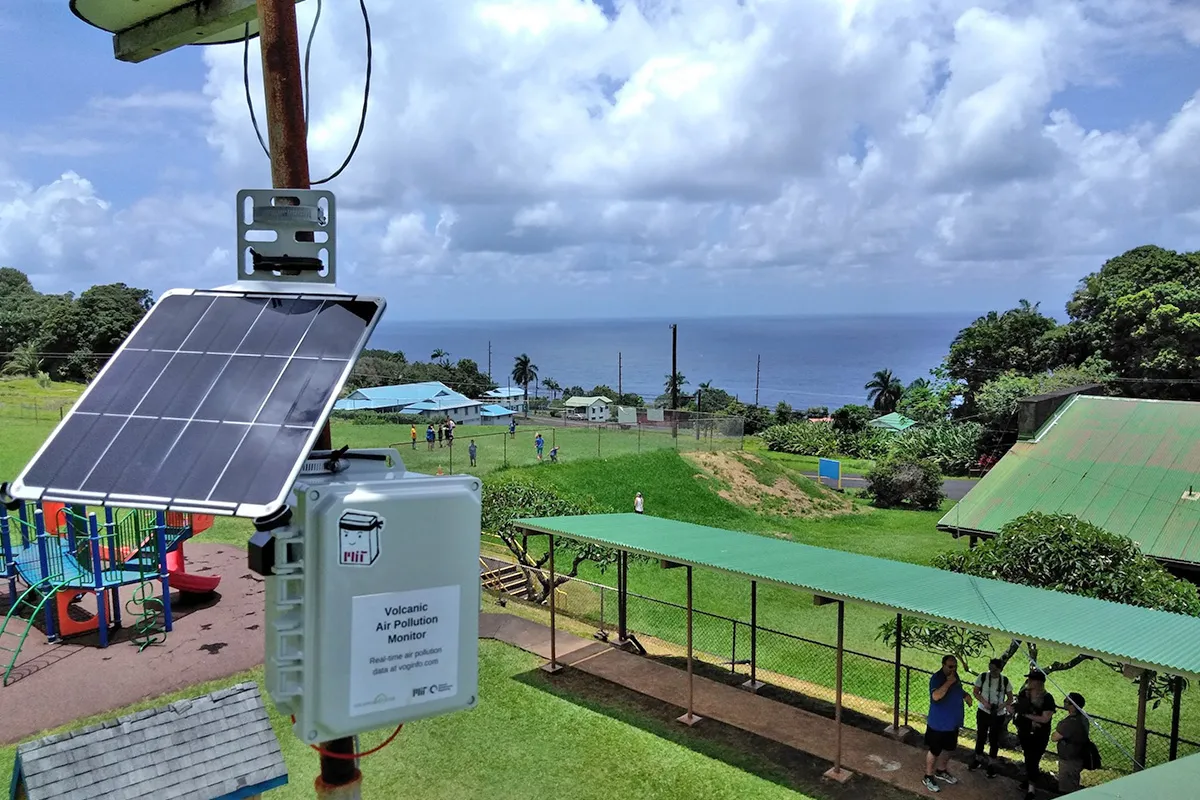
We measure pollutants and dust at your site boundary and at sensitive receptors such as homes, schools and hospitals, to establish a baseline before a project or to check compliance during construction and operation.

Workplace air monitoring

We assess the dust, fumes, gases and vapours that workers are exposed to during their tasks, and compare the results with occupational exposure limits.

Our process

  1. Planning. We review your processes, emission sources, licence conditions and any previous results, then agree on the parameters and monitoring locations.
  2. Field measurements. Our team carries out the measurements under normal operating conditions, recording weather and operating data.
  3. Analysis. We compare results with the limits in the Air Quality Regulations, 2014, workplace exposure standards and your licence conditions.
  4. Reporting. A clear report with methods, results, compliance status and practical recommendations.

When surveys are needed

  • As a baseline during an Environmental Impact Assessment
  • To meet EIA licence conditions during operation
  • As part of an annual environmental audit
  • After complaints from neighbours or workers
  • After changes to fuel, equipment or processes

Frequently asked questions

Which pollutants do you measure?

Typically sulphur oxides (SOx), nitrogen oxides (NOx), carbon monoxide (CO), volatile organic compounds (VOCs), hydrogen sulphide (H2S) and particulate matter (dust, including PM10 and PM2.5). The exact list depends on your processes and licence conditions.

What is the difference between stack, ambient and workplace monitoring?

Stack monitoring measures what comes out of a chimney or exhaust. Ambient monitoring measures air quality in the surrounding environment, usually at the site boundary or nearby receptors. Workplace monitoring measures what your employees breathe while they work. Each is compared with different limits.

How often should we monitor air quality?

It depends on your licence conditions, the size of your emission sources and the sensitivity of the surroundings. Many facilities monitor at least annually, often as part of their environmental audit, with more frequent checks for large sources.

What happens if our results exceed the limits?

We explain the likely causes and recommend practical fixes, such as burner tuning, fuel changes, maintenance, dust suppression, extraction or stack modifications. We can then re-test to confirm the improvement.

Request a quote for Air Quality Monitoring Survey

Share a few details about your project and a consultant will get back to you.

We only use your details to respond to this enquiry.
Prefer to talk? Call +254 724 117 068 or WhatsApp us.